Sadly, I have to write and report that the author John Burke died on the 20th September 2011 after a long illness.
John Burke was an inspirational writer and he will be missed.
My condolences go to his family and my thanks to Bronwen Burke who left a comment to advise of his death.
Some more about the life and work of John Burke can be found earlier on this site.
Friday, 23 September 2011

Sunday, 18 September 2011
DEAD ISLAND by Mark Morris

In the beginning there was the trailer that millions tuned into. Dead Island looked to be the must have game of the year. Both the game and the novel were released on the 9th September and sold out on the day. Telephoned 'Game' and was told by that the game had not been released.
Seven days on and without anymore copies of the game to be found in stores or on-line I began to think that the hype was in full swing. I could imagine that the distributors were sitting around laughing as they made gamers hungry for the game.
Fortunately, Bantam have issued the novelisation of the game by Mark Morris. And a good job too for, having now read the book, I don't really need the game.
So four heroes and heroines are off on their hols (well, three are) on the paradise island of Banoi. One hit wonder Sam B is ready to make a comeback; ex-NFL footballer Logan is on holiday and Sydney cop, Purna, is taking time out after she has killed off a child abuser. The hotel receptionist, Xian Mai makes up the fourth. The thing they have in common is an immunity to the virus that is about to turn the population of Banoi into zombies.
It is a gory fight for survival as each character tries to deal with an unreal scenario. Zombies only exist in games - right? Each of the four have to come to terms with a very real enemy - and it turns out that zombies are just a minor problem.
I loved the moment where they come across a book rack that has Nevil Shute and Harold Robbins novels.
Mark Morris has produced one of the best game novelisations to date. He lives in Yorkshire. His first novel 'Toady' was published in 1989. Since then he has written sixteen books including four for the 'Dr Who' series. He is now working on the novelisation of a 1970s Hammer film 'Vampire Circus'.
THE END OF EVERYTHING by Megan Abbott
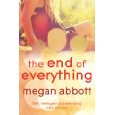
My reading, just lately, seems to have developed a theme. First there was assisted suicide (Ruth Dugdall's 'The Sacrificial Man'); next came child abuse ('The Kid' by Kevin Lewis) and now something different that has a connection.
On the face of it Lizzie and Evie are two 13 year old girls who not only are the best of friends but live next door to each other. They share everything and know each other very well.
Megan Abbott's 'The End Of Everything' is a lot deeper than it first appears.
Told in the first person by Lizzie the reader learns that there are more to certain relationships than meet the eye. Some of it is innocent, though even that depends on how it is interpreted.
Evie disappears.
Has she been abducted?
Lizzie has clues and theories to offer - some presented as a lie yet are true in meaning.
The novel, set in the 1980s, is complex which makes it difficult to review.
What I really loved was a prose that could have come from Jack Kerouac (notably 'Visions Of Cody') and a story that evoked the atmosphere of Erskine Caldwell.
Highly recommended.
Tuesday, 6 September 2011
THE KID by Kevin Lewis

Ever since Dave Pelzer came out with 'A Child Called It' books with various abused themes seem to have filled the bookshelves.
So Kevin Lewis's 'The Kid' wouldn't have normally caught my attention. What set it apart from other books (at first) was that it was set in King Henry's Drive in the New Addington area of Croydon (South London). This was right on my doorstep.
Kevin Lewis suffered a childhood that was punctuated with violent assaults on him by his mother while his father hid in the kitchen listening to Elvis and drinking himself into oblivion.
Little wonder, then, that Kevin wet himself - and got beaten for it. Not just by his mother but by the school bullies. Still Kevin's mother was clever for she never marked his face and if anyone asked about the bruises on other parts of his body she had the ready explanation that Kevin was a clumsy kid who was always falling over.
Still the day came when Kevin had his head split open and then, and only then, did Social Services act.
For two years Kevin found peace in a children's home. The bed wetting stopped and he began to live a normal life. Guess what - Social Services sent him back home to live with his parents. Of course, Kevin's life returned to one of daily beatings. Social Services were still monitoring the situation but Kevin's mother knew, in advance, when they were coming which gave her time to allow Kevin's bruises to fade.
I could go on more in the same vein but Kevin, eventually, fights back. He has big ideas and finds himself placed with a family who encouraged him in his dreams. Unfortunately, his new family (who do show him love and affection) do not know how far he will go to realise his dreams. Not all of it is honest but after all he has gone through who can really blame him.
Then he meets his future wife, Jackie, who has to be a strong influence in his life. In fact this book was written for her so that she would understand him.
'The Kid' is not an easy read. Through a touch of luck Kevin Lewis did not go the way of Baby P or Victoria Colombierre. If Kevin was neglected by his parents then he was, also, neglected by Social Services.
At the end of 'The Kid Moves On' he says that he thinks that Social Services should be given a chance. Sorry, Social Services is not fit for purpose. They can go into court, say what they like and the Judge believes what they say. There are more kids in care today that need not be there while those that are in real need of the Social Services care are neglected.
More often than not Social Services, just as they did with Kevin Lewis, ask the abused child if they want to stay with their family in front of their abuser. What else is the child going to say? Kevin Lewis knew that if he asked to be taken away his mother would have beaten him up.
'The Kid' has been made into a movie and filmed in various locations around Croydon.
Although a good movie that sticks to the basics of the abuse it becomes apparent that the second half of the story veers away from the original.
Still the one thing that I noticed is that Croydon Social Services as depicted in the book is no different today.
Monday, 15 August 2011
JURY RIGGED (a short story)
JURY RIGGED
Juries – twelve good men and true, except these days the female sex are added to the mix.
Juries are never wrong – right? Even if they are wrong they are right.
Tell that to the likes of Timothy Evans or Derek Bentley. Or Ruth Ellis, the last woman to hang, who fed up with domestic abuse killed her abuser and Sally Clark who, after serving four years of her sentence, was found to have not killed any of her children. Winning an appeal did not mend the wound and as a victim of depression she committed suicide.
Tell that to the victims of the rapists, the paedophiles and drug dealers given their freedom.
Give juries their due though. Sometimes it comes down to the prosecution’s witnesses – sure, they swear on the good book to tell the truth but, believe me, it is their version of the truth; the truth as they see it. And, yes, the same goes for the defence. So an impasse and the decision goes to the one who makes the best case.
Jenny Summers was seventeen years old.
Her battered, bruised, naked body was found lying on the rotten remains of a cardboard box at the back of a disused railway station. Nobody cared – not really. She was just another junkie prostitute who had picked up the wrong punter. Forensics did their thing. Detectives sort of detected and made some notes.
Jenny Summers was a nobody – a loser.
At the age of fifteen Jenny had got herself pregnant and gave birth to a little girl. As she was under age the Child Protection team got involved. She found herself surrounded by professionals who heard what she said – but they had already made their minds up. The Social Worker said that Jenny was violent and used that as grounds to remove the child. Truth was that Jenny was guilty of arguing her case. The court believed the Social Worker and the child was removed.
The pain hurt.
Heroin dulled the pain.
Prostitution paid for the pain relief.
The man who was her pimp and the supplier of her drugs was Sam Elder.
Jenny Summers is one of many.
Sam Elder, too, is one of many.
Sam Elder does not see himself as a killer. He sees himself as a kind of Samaritan – and a businessman. Where there is demand he has the supply.
What good is prison to the likes of Sam Elder? Take away his assets – but he has that covered. From prison he can still make deals and profit from his trade.
Well, the jury found Sam Elder not guilty of drug dealing and he walked free.
He stood outside the court with a cocky attitude, a thick cigar between his stubby, gold ringed fingers being congratulated by friends and family. Only when the cops appeared did he take a pause to look at the two head bowed men. Sam Elder laughed at their discomfort.
However, British justice is not always what it seems.
Sam Elder knew he was going to walk free.
He knew because everybody has something to hide.
There are those who have debts. Others who have a bit on the side. Cash that they would rather their partner knew nothing about. Out of a jury of twelve there is the potential for twelve little secrets.
That’s my job. Find their secrets and put the pressure on – just enough to ensure that my ‘client’ walks free.
It’s a living. I enjoy my work – I wouldn’t do it otherwise - doesn’t mean that I like my clients. Fact is I don’t like people full stop.
So there you go I fixed the jury so that Sam Elder walked free.
No regrets. No remorse.
Job done.
Almost.
My mobile bleeps. I check my messages – it’s confirmation that the balance of my fee has been paid. I walk over to Sam Elder. He grins as I slap him on the arm. My hand stays there as we exchange words of congratulations. He’s not sure who I am – we have never met face to face – but he’s convinced I’m a friend.
Friend?
I hate his kind.
These anonymous killers.
Sam Elder collapsed just minutes later. He was dead by the time he reached hospital. Diagnosis – he had died of an overdose of tainted heroin. The same drug that had been sold to and killed Jenny Summers.
An autopsy report will show that a puncture wound has been found in his upper arm.
A police officer strolls over to me. He can’t believe what has happened.
I tell him that it looks like justice was done. What I don’t tell him is that Sam Elder wasn’t the first nor would he be the last.
He grins – back to the station, Sarge?
I nod.
The above was written for the local writer's group that I have just joined.
Juries – twelve good men and true, except these days the female sex are added to the mix.
Juries are never wrong – right? Even if they are wrong they are right.
Tell that to the likes of Timothy Evans or Derek Bentley. Or Ruth Ellis, the last woman to hang, who fed up with domestic abuse killed her abuser and Sally Clark who, after serving four years of her sentence, was found to have not killed any of her children. Winning an appeal did not mend the wound and as a victim of depression she committed suicide.
Tell that to the victims of the rapists, the paedophiles and drug dealers given their freedom.
Give juries their due though. Sometimes it comes down to the prosecution’s witnesses – sure, they swear on the good book to tell the truth but, believe me, it is their version of the truth; the truth as they see it. And, yes, the same goes for the defence. So an impasse and the decision goes to the one who makes the best case.
Jenny Summers was seventeen years old.
Her battered, bruised, naked body was found lying on the rotten remains of a cardboard box at the back of a disused railway station. Nobody cared – not really. She was just another junkie prostitute who had picked up the wrong punter. Forensics did their thing. Detectives sort of detected and made some notes.
Jenny Summers was a nobody – a loser.
At the age of fifteen Jenny had got herself pregnant and gave birth to a little girl. As she was under age the Child Protection team got involved. She found herself surrounded by professionals who heard what she said – but they had already made their minds up. The Social Worker said that Jenny was violent and used that as grounds to remove the child. Truth was that Jenny was guilty of arguing her case. The court believed the Social Worker and the child was removed.
The pain hurt.
Heroin dulled the pain.
Prostitution paid for the pain relief.
The man who was her pimp and the supplier of her drugs was Sam Elder.
Jenny Summers is one of many.
Sam Elder, too, is one of many.
Sam Elder does not see himself as a killer. He sees himself as a kind of Samaritan – and a businessman. Where there is demand he has the supply.
What good is prison to the likes of Sam Elder? Take away his assets – but he has that covered. From prison he can still make deals and profit from his trade.
Well, the jury found Sam Elder not guilty of drug dealing and he walked free.
He stood outside the court with a cocky attitude, a thick cigar between his stubby, gold ringed fingers being congratulated by friends and family. Only when the cops appeared did he take a pause to look at the two head bowed men. Sam Elder laughed at their discomfort.
However, British justice is not always what it seems.
Sam Elder knew he was going to walk free.
He knew because everybody has something to hide.
There are those who have debts. Others who have a bit on the side. Cash that they would rather their partner knew nothing about. Out of a jury of twelve there is the potential for twelve little secrets.
That’s my job. Find their secrets and put the pressure on – just enough to ensure that my ‘client’ walks free.
It’s a living. I enjoy my work – I wouldn’t do it otherwise - doesn’t mean that I like my clients. Fact is I don’t like people full stop.
So there you go I fixed the jury so that Sam Elder walked free.
No regrets. No remorse.
Job done.
Almost.
My mobile bleeps. I check my messages – it’s confirmation that the balance of my fee has been paid. I walk over to Sam Elder. He grins as I slap him on the arm. My hand stays there as we exchange words of congratulations. He’s not sure who I am – we have never met face to face – but he’s convinced I’m a friend.
Friend?
I hate his kind.
These anonymous killers.
Sam Elder collapsed just minutes later. He was dead by the time he reached hospital. Diagnosis – he had died of an overdose of tainted heroin. The same drug that had been sold to and killed Jenny Summers.
An autopsy report will show that a puncture wound has been found in his upper arm.
A police officer strolls over to me. He can’t believe what has happened.
I tell him that it looks like justice was done. What I don’t tell him is that Sam Elder wasn’t the first nor would he be the last.
He grins – back to the station, Sarge?
I nod.
The above was written for the local writer's group that I have just joined.
Friday, 12 August 2011
THE BURNING OF CROYDON


My daughter is a single parent with two children.
The pictures show the buildings on fire at the junction of London Road, Croydon with St.James Road and Sumner Road. The whole terrace of shops and flats were gutted in the riots.
At first, we were not aware of the problems along London Road as the news footage concentrated on the blaze of the furniture store at Reeves Corner. The store had been trading there for 150 years and, I suppose, a symbol of Croydon with a tram stop being named for it.
For a moment there was a snippet of another building on fire. It looked like the jewellers on the corner of our daughter's road. In fact, it was just that because a few minutes later our granddaughter was on the phone to tell us that everything was on fire. There were people running down the road but they could not see any police.
Despite the fires raging in London Road there was no attempt to evacuate the residential houses that backed on to it. In fact, the residents were told to stay in their homes.
Knowing how vulnerable my daughter was (she has tourettes and her daughter is autistic) my son attempted to go and get her away to safety but was turned back by the police.
The following day he did manage to slip through the cordon and get my daughter and her children to safety.
Luckily, the fires did not reach them and their home is ok. But the psychological scars still remain - it was an experience that they don't want to go through again.
Some time back - I think it may have been on James Reasoner's blog about the movie 'Harry Brown' - I said that the events at the end of the film hadn't yet happened but the time was very close. Seems, in some ways, to be prophetic words as last Sunday those rioting scenes became reality. For a while the streets of Croydon and the rest of London became no-go areas where rioters were allowed to loot.
As my kids say Croydon is not the same anymore.
OF WESTERN THINGS

I found this poster on a visit to Woodbridge, Suffolk. Needless to say I didn't get to visit the show. But it was good to see the advert on, of all days, Wild West Monday.
Back in 1915 W.Somerset Maugham published a novel called 'Of Human Bondage'. In Chapter 2 the young hero, Philip Carey, was in a drawing room where he had taken three large cushions from the sofa and one each from the armchairs with which he had built a cave where he was hiding from the Red Indians lurking behind the curtains. By placing his ear against the floor he could feel the thunder of buffalo hooves pounding across the prairie.
Within a couple of short paragraphs it reminded me just how far back children played at cowboys and indians.
Subscribe to:
Posts (Atom)
